
Deep Rooted In Nature
In Singapore’s sole UNESCO World Heritage site, a pair of restored colonial mansions unravel a compelling tale of the country’s flora and fauna.
BY YE SUILING
PHOTOS THE STRAITS TIMES/SPH MEDIA
D
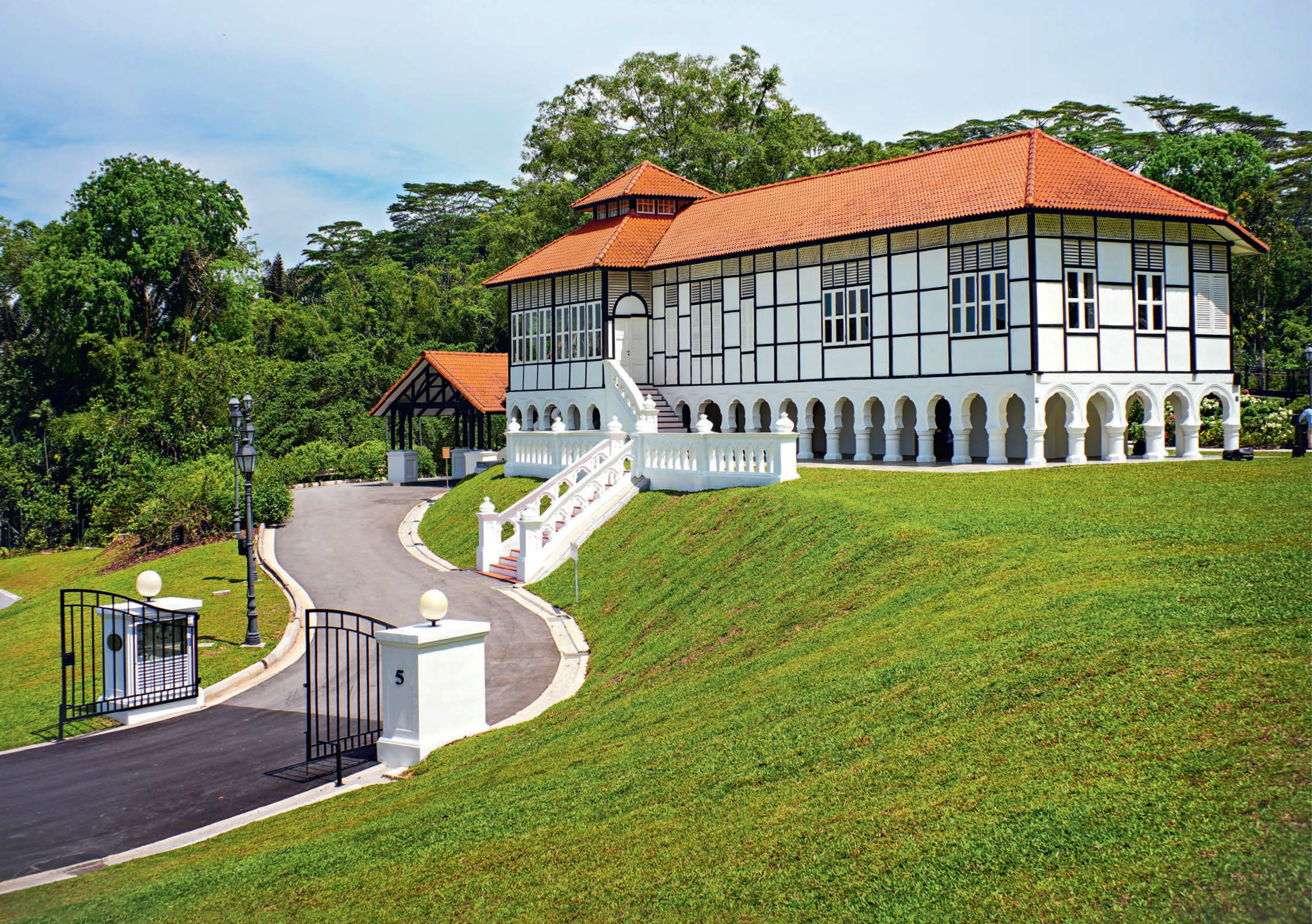
andyishly trussed and suited up in half-timbered, monochromatic facades, the handsome pair of rambling manors standing fey amid rolling emerald hills could have graced a cover of a Jane Austen novel.
At first blush, Atbara and Inverturret – which opened in UNESCO World Heritage site Singapore Botanic Gardens in 2021 as part of its quaintly named eight-hectare Gallop Extension – are object lessons in sensitively restored colonial architecture.
For one, the conservation wonks tasked with mending new life into the turn-of-the-19th-century mock-Tudor style houses certainly retained the Indo-Saracenic grace notes of the luminous British architect Regent Alfred John Bidwell. While evocative of the reposeful English countryside that inspired countless elegies, both bungalows reflect vernacular architectural details, such as flood-proof raised verandahs, pitched roofs and ample windows in response to a more tempestuous local climate. The buildings embrace their new purpose as veritable museums that deftly contextualise the 163-year-old garden hosting them.
At Inverturret (below), distinguished by its curvilinear archways – named with the Scottish Highlands’ rivers and streams in mind – the Botanical Art Gallery is lined with delicately painted watercolour botanical illustrations of native species. Among the more than 2,000 paintings are those depicting once rustling lifeforms that have vanished from the face of the earth.
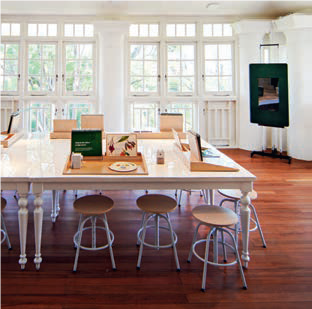
It is a humbling reminder of the tenuous line we thread as custodians of the environment, and is backed by a compendium of historical photographs and artefacts, including a 16th-century book of medicinal plants endowed by the British Museum.
Projected onto the walls are hypnotic animations of fauna, while wide balconies upstairs encourage quiet introspection. Ruminate over the sibling properties’ past tenants, including the Straits Trading Company in 1923, the Royal Air Force Far East before World War II, and the French Foreign Office till their return to the state in 1999.
In contrast to the dreamy gallery, Atbara - named after a city in northeastern Sudan, where the British won a historic battle – is livelier as the Forest Discovery Centre @ Arboretum. Here, in Singapore’s oldest black-and-white house flooded with natural light, marvel at a glass-to-ceiling installation that is an amalgamation of local forest habitats, including coastal and mangrove forests, freshwater swamp forests and tropical rainforests, including dipterocarps common to Southeast Asia.
Other multimedia displays allow visitors to see and hear the fascinating wildlife that slithers, swoops and skulks through the local jungles. Chan Shiao Fen, a Malaysian art director spotted perusing the exhibits, says: “Singaporeans have a knack for preserving its heritage, especially in the innovative way historic buildings are repurposed. It’s easy to see how the public benefits from these initiatives, which is a hallmark of an inclusive society.”
This May Also Interest You