Nourishing The Body And Mind
Tapping into the power of food and art, two marginalised groups of people with different cultures and disabilities find a powerful commonality, community and friendship.
BY ANNIE TAN
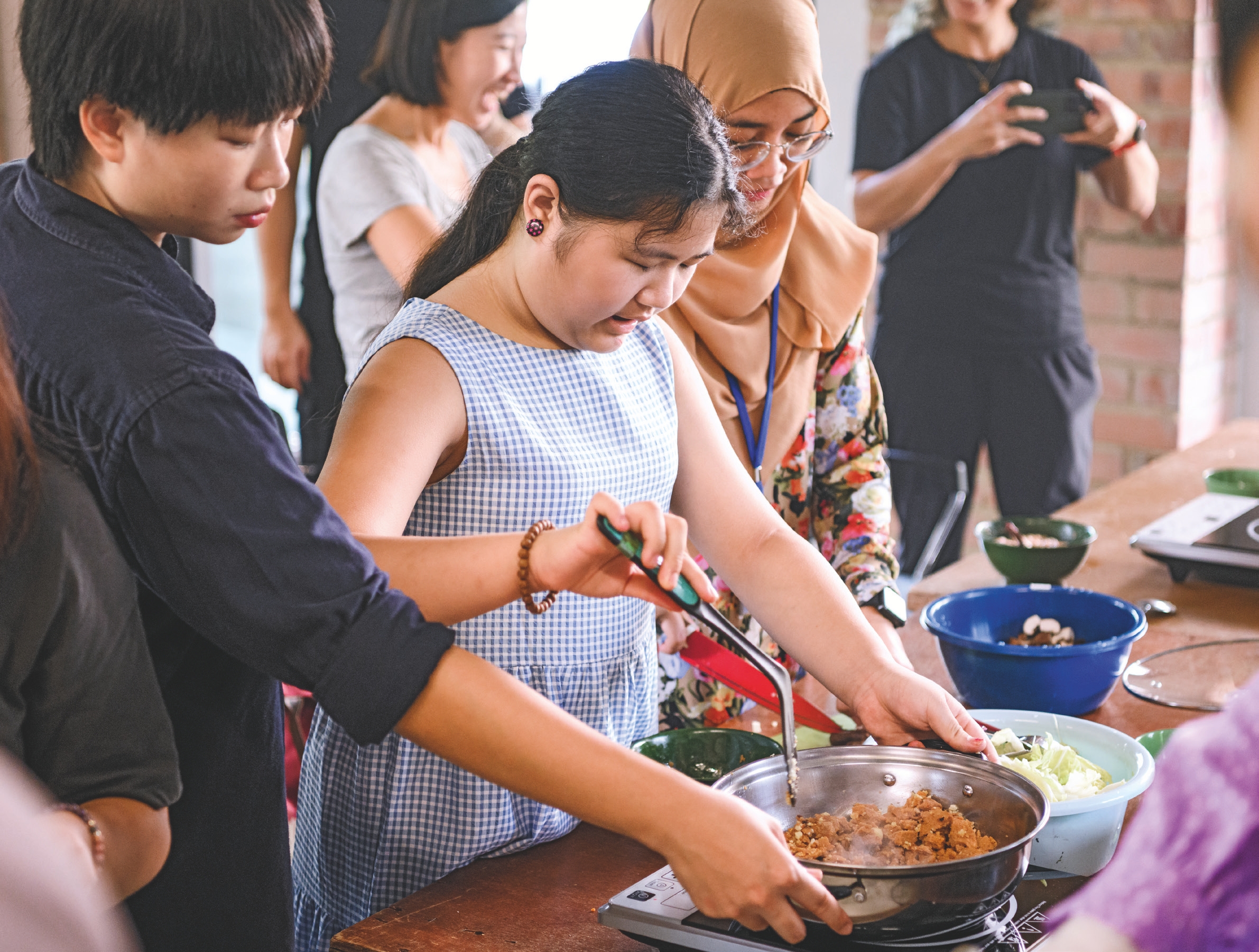
Artists and visually impaired people participated in the Edible Art Club workshop conducted by Singapore’s Unseen Art Initiatives.
I
t started quite serendipitously. A few young Myanmarese artists based in Singapore shared the work of local arts platform Unseen Art Initiatives with the artistic community in Myanmar. That was how Yangon-based art curator Sid Kuang Sett Lin discovered the inclusive art platform that works with people with disabilities some 2,000km away.
The introduction to Unseen’s work sparked an idea in Sid Kuang Sett Lin. He felt compelled to email Unseen’s founder and artistic director, Alecia Neo, but was not expecting to hear back from her. He had hoped for an art and cultural collaboration with a small clinic, Aung Mental Health, located in Myanmar’s capital, Yangon, which works to de-institutionalise mental health within the community.
Much to his surprise, Neo replied promptly and it became clear to the founders of both Unseen and Aung Mental Health that despite vastly different circumstances, the two groups had something deeper in common — a commitment to help marginalised communities live with dignity and fulfilment.
This was how the Edible Art Club was born. Supported by a grant under the Singapore International Foundation (SIF)’s Arts for Good Projects, a small group of sighted and visually impaired Singaporeans came together over Zoom with eight Myanmarese counterparts with visual impairments and psychosocial disabilities.
“This project built community partnership across borders and across different disabilities – it extended the community for marginalised groups.”
Dr San San Oo, co-founder, Aung Mental Health, Myanmar
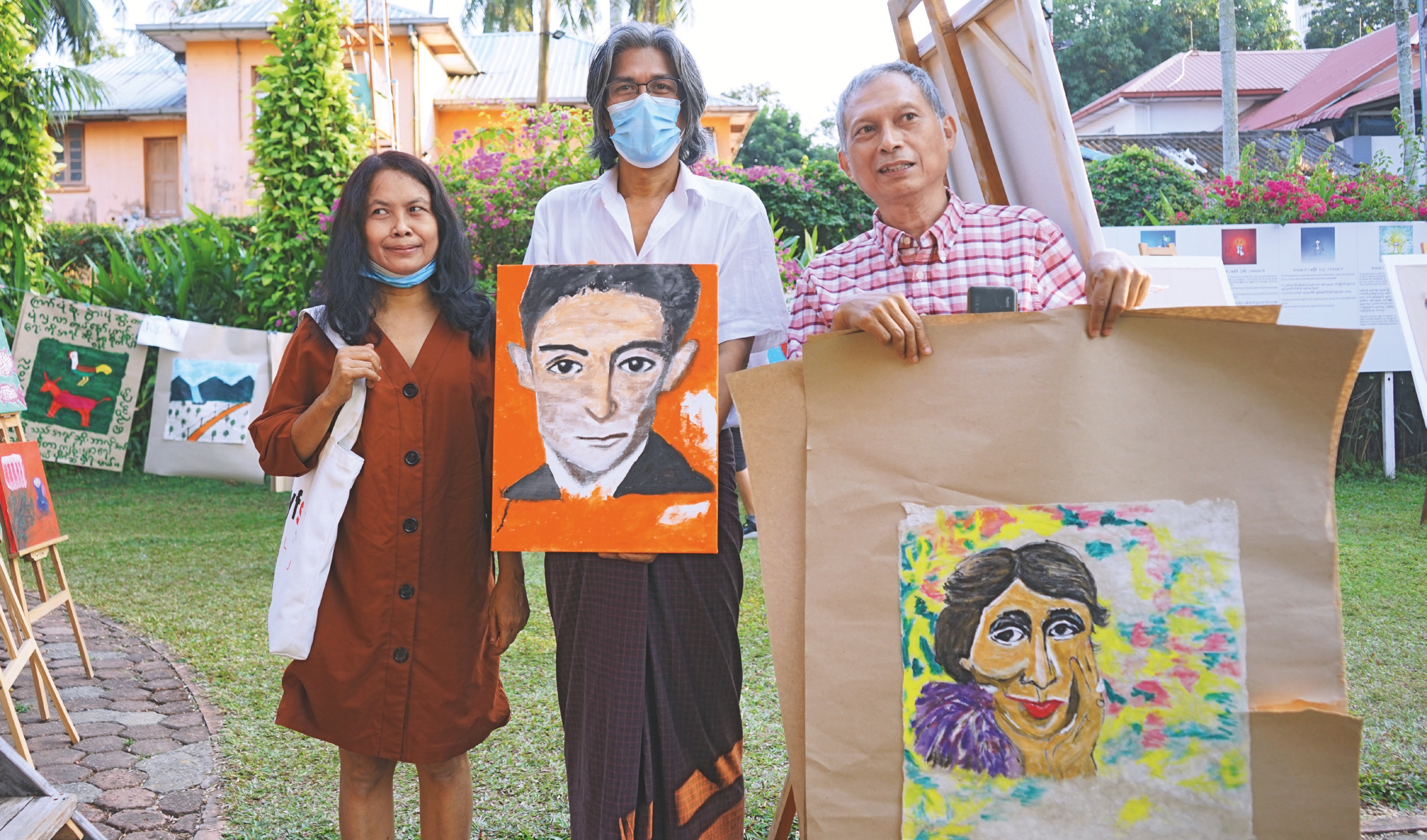
Dr San San Oo (left) and Dr Aung Min (right), who run Yangon-based Aung Mental Health, with a cooking and art workshop participant in Myanmar.
CONNECTING OVER FOOD AND ART
Between November and December 2022, 20 Singaporean participants gathered to cook simple comfort food such as mee hoon guay (hand-torn noodles) soup and stir-fried wong bok (Napa cabbage). Cooking might seem like an ordinary activity for most people, but for people with visual impairment and psychosocial disabilities, it proved to be deeply symbolic.
“In a psychiatric hospital, food is provided. Patients are not allowed to handle their own knife or scissors, or make their own food,” shares Dr San San Oo, a psychiatrist and co-founder of Aung Mental Health, which empowers people with psychosocial disabilities to cook their meals.
Neo says: “We found a strong parallel to the experience of visually impaired people, who were often not trusted to partake in some everyday activities such as cooking. These were perceived as dangerous for them.”
For this reason, many of the visually impaired participants who joined the Edible Art Club were first-time cooks. Paired with sighted participants, and led by visually impaired secondary-school teacher Penny Chong, they were entrusted with knives and induction cookers to whip up their own culinary creations.
“I was excited when Neo approached me to lead cooking activities. But I also felt apprehensive as I only cook for myself and my family, and had never taught cooking prior to this,” admits Chong. “Initially, I assumed the participants would have difficulties, so we measured everything for them. But towards the last few sessions, we let them try for themselves. After all, the underscoring message is empowerment — and learning to challenge our assumptions gives us the courage to do more.”
Across borders, Myanmarese participants with psychosocial disabilities and visual impairments engaged in a series of painting and art-making workshops, followed by meals of indigenous dishes prepared by local chefs who are artists themselves. It was also the first time many of these participants held a paint brush.
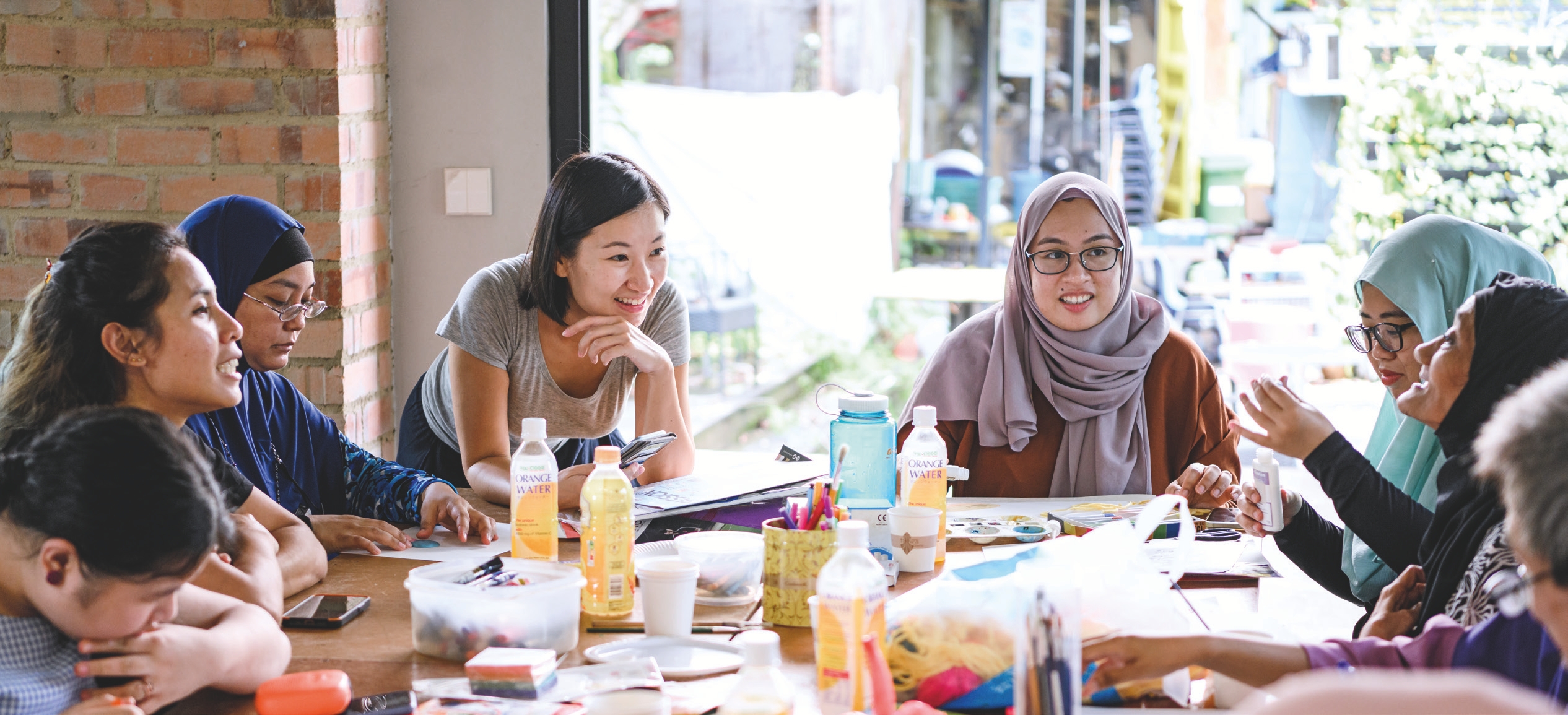
The process of creating art brought the participants together despite their different life experiences.
CUTTING ACROSS BARRIERS
Even as the programme helped the participants — mostly people with disabilities and mental health challenges — appreciate a new mode of self-expression, it was fraught with challenges. The organising teams in both countries took almost eight months just to plan and execute the workshops.
One issue was transportation. While Singapore is well-known for its public system and smooth connectivity, it was difficult for some visually impaired people to travel to the workshop on their own. Thus, they needed volunteers and caregivers to take them to the event venue.
In Myanmar, the biggest issue for participants in rural areas was that they did not have mobile phones or Internet access. “Travelling to homes of visually impaired participants to set up the Zoom sessions was risky amid the ongoing civil unrest in the country,” recalls Dr San San Oo. But the team pushed ahead despite the dangers.
Another challenge was the different work schedules: It was hard to find a common time to run the workshops in both countries. Instead, the Singapore and Myanmar groups ran sessions separately and supported each other’s processes via Zoom dialogues and observation of workshops, offering feedback on each other’s activities with the help of translators.
While Neo and Chong led the programmes in Singapore, a volunteer took charge of the dialogue over Zoom, bringing the laptop around the room during the workshops to facilitate cross-border conversations where participants chatted about their day, lives, as well as circumstances and passions.
“Having Myanmarese participants in the background added an extra dimension. I liked that it was not so insular within the four walls of the cooking workshop, but that people in Myanmar were also doing the same thing — they were also eating together. Even though we are far away from one another, this ties us together,” says one participant.
“Such cross-border collaborations help people of different backgrounds have more understanding and be more accepting towards one another’s differences.”
Penny Chong, art instructor, Singapore
Despite never meeting in person, Singaporean and Myanmarese participants quickly became friends. “Food and art bring people together, not just across ethnic groups but also across borders,” says Chong. The trans-border initiative also demonstrated that, despite adversities, humans do not just strive to survive but come out stronger. “This programme helped us tap into our collective knowledge of not just surviving difficult times but thriving amid challenges,” adds Neo.
AN EXTENDED COMMUNITY
It is an important friendship, one that provides vital mutual support for these vulnerable groups. In Myanmar, people with psychosocial abilities became guides and collaborators to their visually impaired partners. “This process reframes the former as active contributors, not people that need fixing,” says Neo.
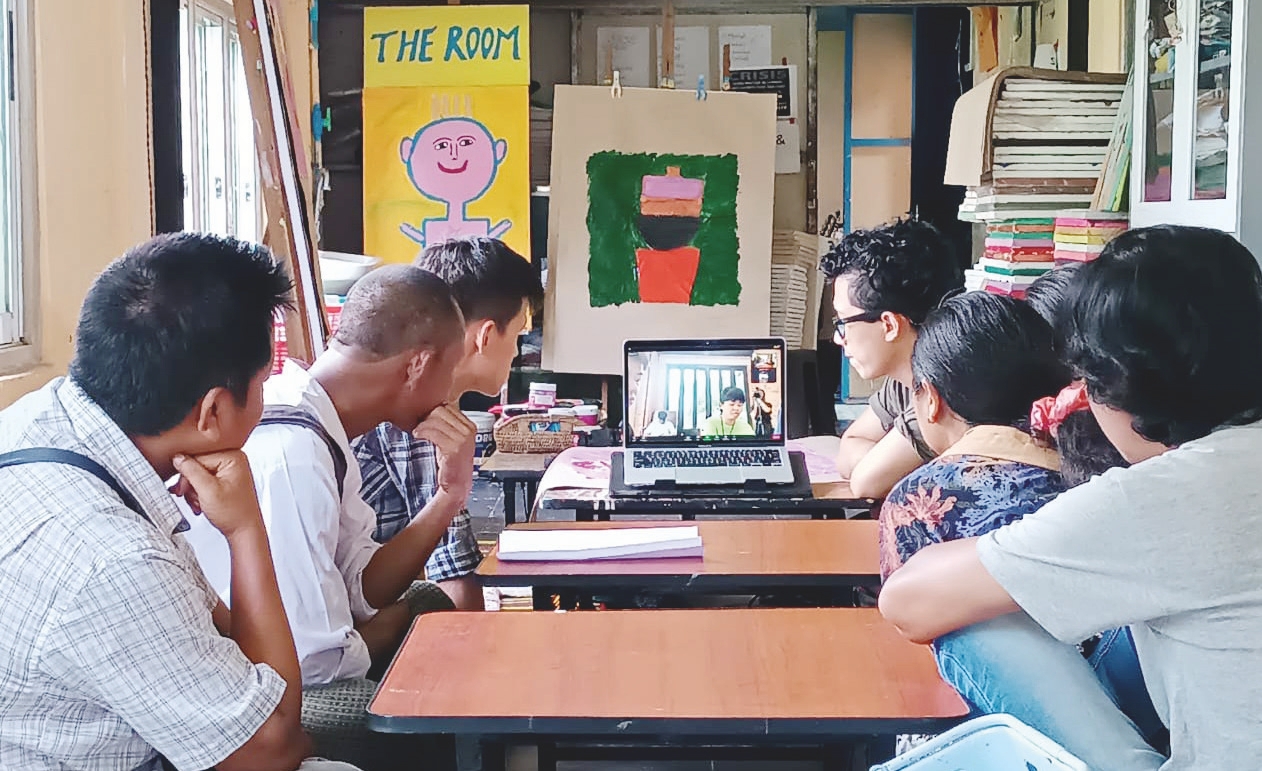
An enriching cultural exchange took place between Singaporean and Myanmarese participants via Zoom.
For instance, Myanmarese participant Winnie Phoo, who is visually impaired, was paired with Ni Ni Mar, a participant suffering from post-traumatic stress disorder after she was imprisoned at the age of 17 because a gambling ticket was found in her pocket. After joining the Edible Art Club, the duo created five paintings together and became friends. They continue to paint together.
Exchanges also took place across cultures. Myanmarese participants learnt about the policies and infrastructure available for disabled people in Singapore, while their Singapore counterparts found out about the education system for the disabled in Myanmar. “Such cross-border collaborations help people of different backgrounds have more understanding and be more accepting towards one another’s differences,” says Chong.
There were also other learnings. “From Dr Aung Min’s sharing, I learnt about the centrality of spirituality in art practice for the Myanmarese. It made me think about how we seldom speak of spirituality in Singapore and how understanding art seems limited by the lens of commerce, aesthetics and function,” observes Neo, who is an artist herself.
“Perhaps focusing on economic success has brought us further from our indigenous knowledge about our land and traditions. Might embracing our spiritual side encourage innovations and creativity in unforeseen ways and help us in dealing with uncertainty during crises?”
To celebrate this friendship and cultural learnings, a joint art exhibition, featuring the work of the participants, was hosted at the Institut Français de Birmanie, Yangon from 21 to 27 January this year.
“This project built community partnership across borders and across different disabilities — it extended the community for marginalised groups,” reflects Dr San San Oo.
This May Also Interest You