Eyes On Sustainability
The third edition of the Earthshot Prize held in Singapore shone a light on collective global efforts towards creating a better and greener world through innovation.
BY RAHIMAH RASHITH
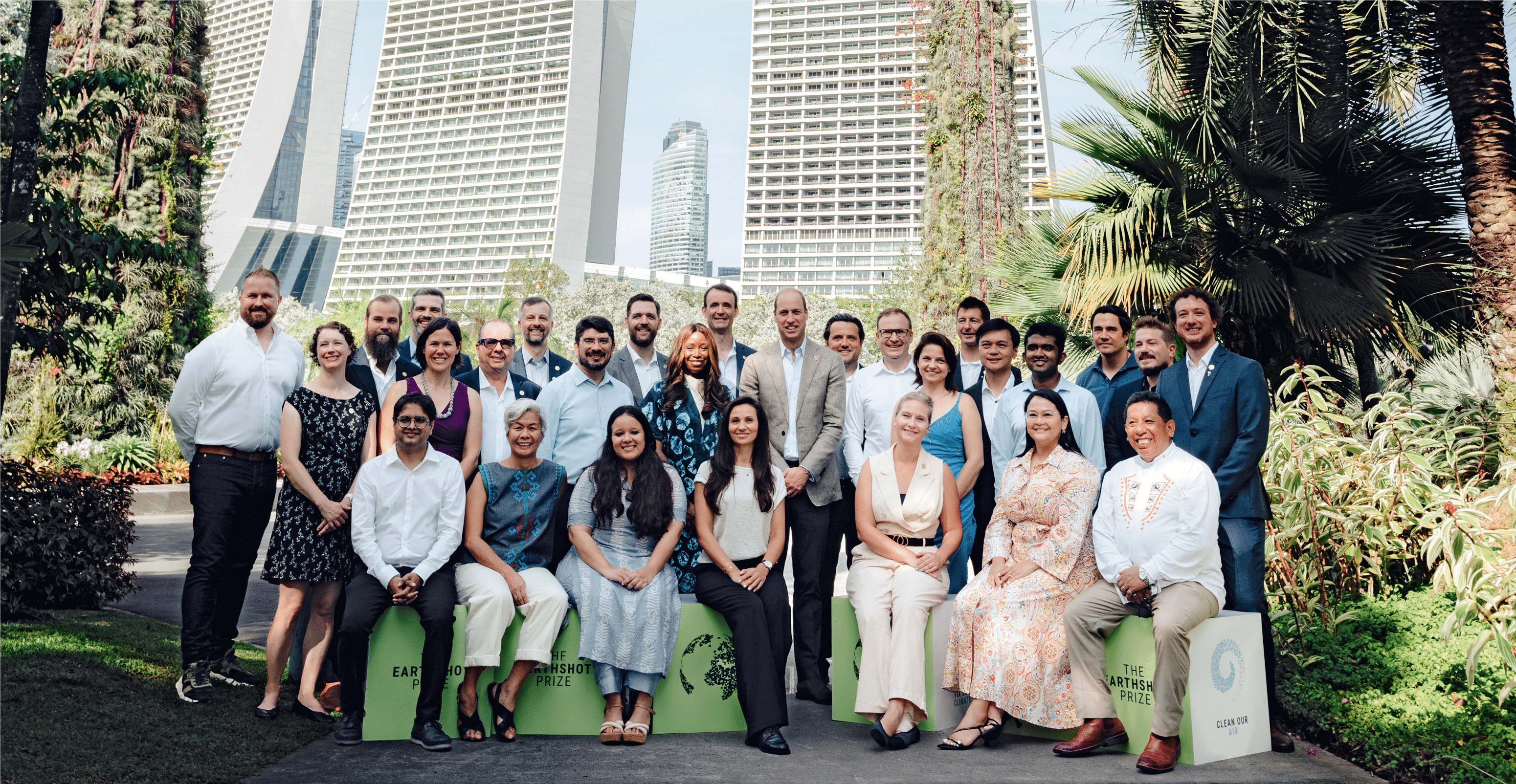
Prince William (centre) was in Singapore for the third edition of the Earthshot Prize.
H
istorically, those who have contributed the least to climate change are suffering its worst effects, whether they are farmers whose crops are affected by erratic weather patterns or populations living near toxic landfills.
Taking a shot at tackling the climate crisis unfolding across the world is the annual Earthshot Prize, an ambitious global initiative that seeks to shore up innovative solutions and technologies against the planet’s greatest environmental perils. Founded by William, Prince of Wales the Earthshot Prize seeks to celebrate and scale solutions towards a stable climate for communities, oceans and biodiversity by 2030. The event’s third iteration was held in Singapore in late 2023, following the inaugural edition in London in 2021 and Boston in 2022.
Attended by royalty, thought leaders and government officials and celebrities, the event in Singapore turned out to be a roster of the world’s brightest and most influential minds coming together to discuss a world that is better and greener by design for communities.
“Singapore’s bold vision to be a leader for environmental innovation sets the standard for others to follow.”
Prince William, founder and president, the Earthshot Prize
While in Singapore, Prince William, who is the President of the Earthshot Prize, told local and international media at the event: “Singapore’s bold vision to be a leader for environmental innovation sets the standard for others to follow.”
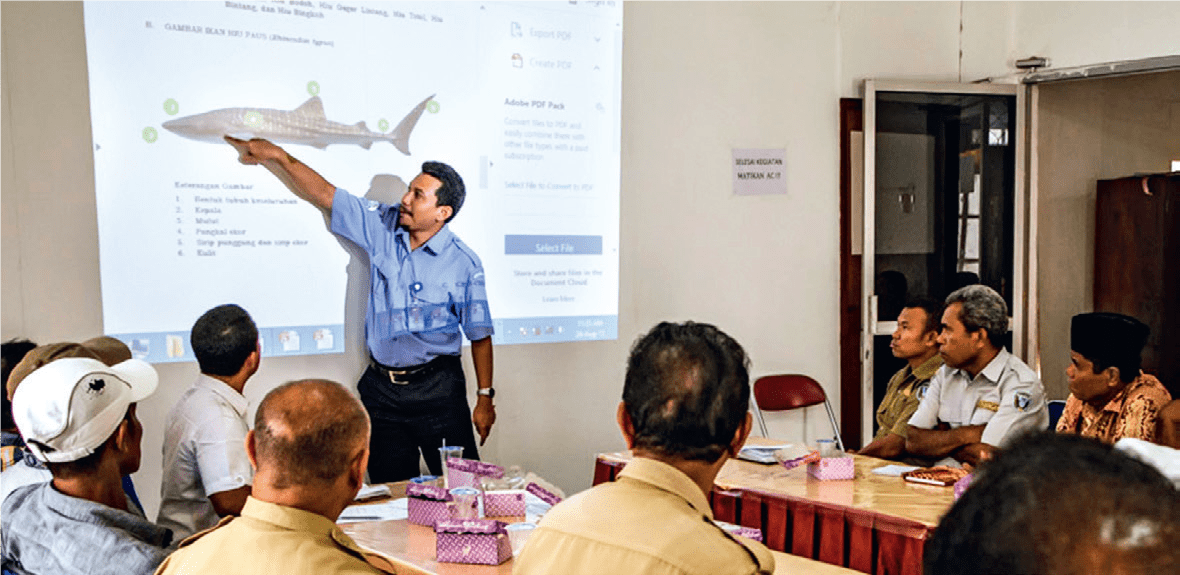
WildAid Marine Program’s initiatives have benefitted even remote areas such as Indonesia’s Raja Ampat coral reefs.
SUSTAINABLE VISION
“Singapore has solidified itself as a pivotal player in the global race to repair and regenerate the planet, exemplifying how humanity can leverage technology, capital and human ingenuity to solve the toughest environmental challenges,” added the Earthshot Prize’s chief executive officer, Hannah Jones. “As the gateway to Southeast Asia, Singapore was the perfect venue for the Earthshot Prize to announce the 2023 winners and celebrate progress across the globe.”
During the award ceremony, five winners representing each of the five categories – Protect and Restore Nature; Clean our Air; Revive our Oceans; Build a Waste-Free World; and Fix our Climate – were honoured with £1 million (S$1.7 million) each to support the scaling of their environmental solutions. Additionally, all 15 finalists were granted a year of technical support and resources to facilitate the acceleration and expansion of their work.
The finalists were chosen by a 13-member council that included Jordan’s Queen Rania, Chinese business magnate Jack Ma, British fashion designer Stella McCartney, naturalist David Attenborough, World Trade Organization chief Ngozi Okonjo-Iweale, and former NBA star Yao Ming.
GREEN THINKING FOR THE WIN
The winners hailed from diverse backgrounds and regions – from Acción Andina’s community-based forest restoration efforts in South America to India-based soil carbon marketplace Boomitra’s incentive-based land restoration. Each of the 15 initiatives address critical environmental issues.
Other finalists included a UK-based company specialising in low-emission tires; a tree-planting programme in Freetown, Sierra Leone; another UK company that uses DNA sequencing to create sustainable dyes; and an antismog movement from Poland
Among the winners is WildAid Marine Program, a global non-profit that scales marine reinforcement to end illegal fishing and strengthen ocean conservation. The winner in the Revive Our Oceans category, led by Emily Owen, director of WildAid Marine Program, aims to promote resilient ecosystems and populations. “WildAid’s marine initiative supports the effective protection of ocean habitat and species, promoting more resilient ecosystems and populations that can better withstand the impacts of climate change,” she said.
Oceans, covering two-thirds of the planet, play a critical role in regulating the atmosphere and providing sustenance to billions, as well as acting as the planet’s biggest carbon sink. However, unsustainable overfishing poses a grave threat to marine life and those who depend on it, with $23 billion lost annually to illegal fishing. Due to a dramatic increase in unsustainable fishing over the past half-century, the UN estimates one-third of the world’s fisheries have been pushed beyond their biological limits.
“WildAid Marine Program collaborates with local communities and government agencies to implement effective protections for key ecosystems,” added Owen. By fostering partnerships with governments, charities, non-profits and academics, the programme tailors strategies to each region’s specific needs. One such partnership is in coastal Ecuador, where WildAid Marine Program collaborated with the government and local fishing cooperatives to protect valuable mangroves through technical assistance, training and equipment provision.
Ecuador’s coast is home to an estimated 55,000 artisanal fishers and their families who depend on fishing for their food and livelihoods. The marine wildlife is becoming scarce due to threats from illegal fishing and the degradation of coastal habitats, including mangroves.
In the next five years, the non-profit aims to scale its operations from 96 marine areas across 16 countries, including the Philippines, Palau and China, to 250.
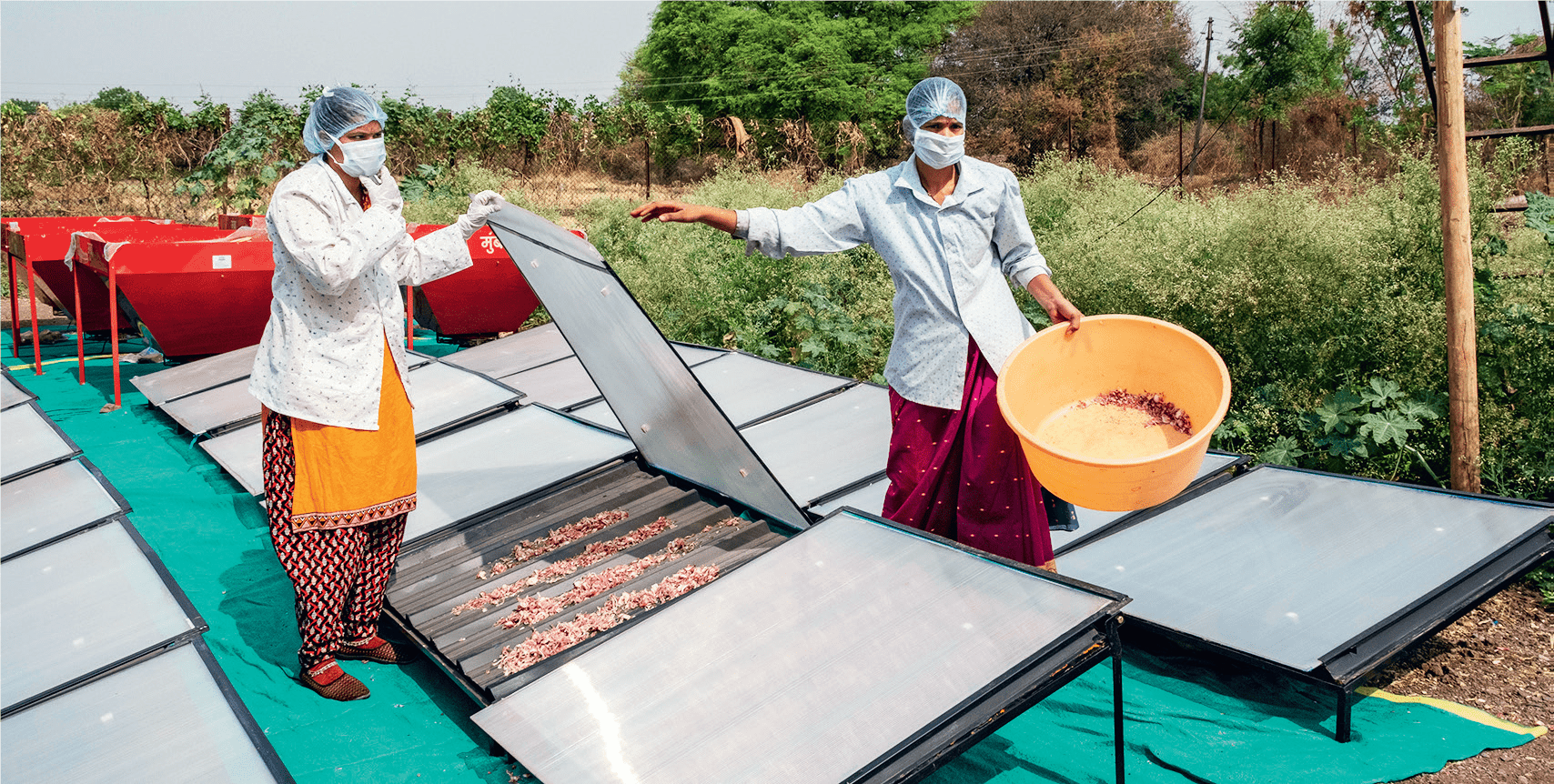
S4S Technologies also helps to empower female farmers through training.
One of the prize recipients from Asia was India’s Science For Society (S4S) Technologies, which provides solar-powered conduction dryers and food processing equipment to female smallholder farmers. This solution aims to prevent surplus produce from rotting in the fields, thus reducing waste. The produce is then sold to the food and beverage industry as food ingredients.
Currently, about 30 per cent of India’s agricultural produce is unsold. Bumper harvests and price fluctuations result in unsold produce going to waste, causing income loss for smallholder farmers.
“S4S’ renewable energy solutions and integrated food-energy system contribute directly to enhancing energy and food security.”
Nidhi Pant, co-founder, S4S Technologies, India
Founded by seven university friends, S4S Technologies addresses food waste, rural poverty and gender inequality by assisting smallholder female farmers in preserving and marketing surplus produce. Co-founder Nidhi Pant emphasises the interconnectedness of these challenges. S4S’s approach combines advanced technology with practical support and training to empower women farmers, enabling them to improve their livelihoods.
Pant further explains that S4S is establishing a new food ecosystem that not only tackles the rise in agricultural greenhouse gas emissions but also meets global food needs. “S4S’ renewable energy solutions and integrated food-energy system contribute directly to enhancing energy and food security.”
ASIA-DRIVEN PROGRESS
Exemplifying Asia’s commitment to sustainability was another winner from the region – Hong Kong’s Green, Renewable, Sustainable Technology (GRST), which develops lithium-ion batteries with watersoluble binding composites.
Justin Hung, co-founder of GRST, highlights the transformative potential of the Earthshot Prize funding in driving the global electric vehicle revolution.
“GRST is at the forefront of revolutionising lithium-ion batteries by removing toxic chemicals, lowering their carbon footprint, and making them highly recyclable,” he said, adding that conventional lithium-ion batteries are made with PFAS, a toxic-forever chemical that make these batteries economically difficult to recycle without negative environmental impact.
GRST’s production process consumes 35 per cent less energy compared to conventional methods, promising a 40 per cent reduction in greenhouse gas emissions.
While currently operating and selling batteries in China, GRST is eyeing potential collaboration with Singapore-based partners to establish a manufacturing facility either in Singapore or neighbouring countries by 2026.
“Singapore’s reputation as a hub of innovation and its strong support for green technologies make it an ideal location and an example to follow.”
Justin Hung, co-founder, GRST, Hong Kong
“Singapore’s reputation as a hub of innovation and its strong support for green technologies make it an ideal location and an example to follow. Its connectivity to global markets and forwardthinking sustainability and technology innovation policies align perfectly with GRST’s vision. Our presence here will enable us to leverage local expertise and integrate into the global supply chain more effectively,” he stressed.
Concluding his visit to the city state, Prince William emphasised the spirit of ingenuity embodied by the finalists.
He said: “Hope does remain. The light of optimism is burning bright in our Earthshot finalists. They remind us that no matter where you are on our planet, the spirit of ingenuity and the ability to inspire change surrounds us all.”
ASIA’S GREEN REVOLUTION
The world’s largest and most populous continent is doubling down on sustainability efforts
$400 BILLION
Estimated value of transportation projects- $700- $750 BILLION
Electric vehicle market value by 2030 - $3.1 TRILLION
Estimated spending on physical assets for land-use and energy systems - $4-$5 TRILLION
Estimated demand by 2030 for green services
This May Also Interest You