Serving With Love
A Singapore-based volunteer-driven collective helps build schools and water tanks in remote Southeast Asian areas.
BY LIEW MING EN
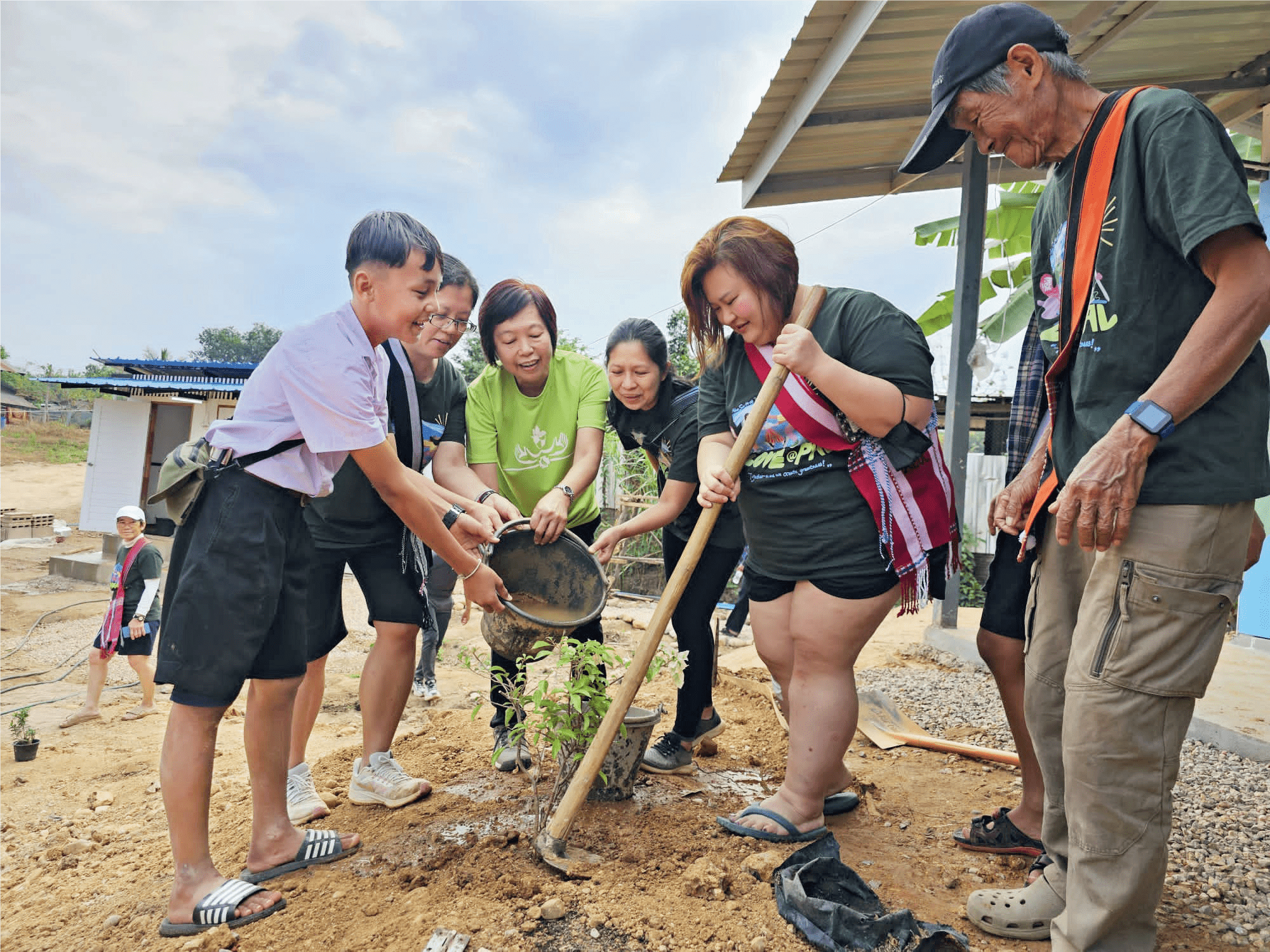
Together with local residents, volunteers from Love Pal Cafe engaged in meaningful activities such as tree planting.
A
little curiosity was all it took to spark a string of volunteering projects spanning years, benefitting thousands in countries across Southeast Asia.
When Singaporean Ong Wee Yeap, who works in the financial services, first decided to sign up for a volunteer trip to Cambodia to help build houses more than two decades ago, he did not foresee that only a mere 10 per cent of funds donated went to the beneficiaries. The remaining money was spent on administrative and logistical needs for the volunteers. He later discovered that the beneficiaries of the project were even required to pay a small rental fee to live in these houses.
It left him questioning: Could he run his own projects where the full amount of donations would be channelled towards the beneficiaries?
In 2004, he brought together a small group of volunteers, found a non-governmental organisation in Cambodia to partner with, and kicked off with a project to build two houses there. The premise was simple: Volunteers would fork out money for all of their own expenses so that any funds collected could be channelled directly to the project and beneficiaries.
The project was successful, and the rest is history. Today, Ong leads Love Pal Cafe, a volunteer-run organisation carrying out humanitarian missions across the region. It has built classrooms and provided medical services for villagers in Thailand, and installed water tanks and provided medical supplies for villagers in the Philippines. Closer to home, the outfit regularly facilitates the donation of supplies and food to organisations such as the Red Cross Home for the Disabled.
But while the desire to help is not a complex one to understand, the planning of such missions can be a complicated undertaking. From recruiting volunteers to fundraising, numerous jigsaw-like puzzle pieces have to fall into place before an overseas humanitarian trip can be organised.
“We get to witness what is happening outside of our comfortable and safe Singapore. We usually are humbled by what we see – the resilience of people with far fewer resources, and the innocence and simple happiness the children tend to exhibit.”
Ong Wee Yeap, founder, Love Pal Cafe
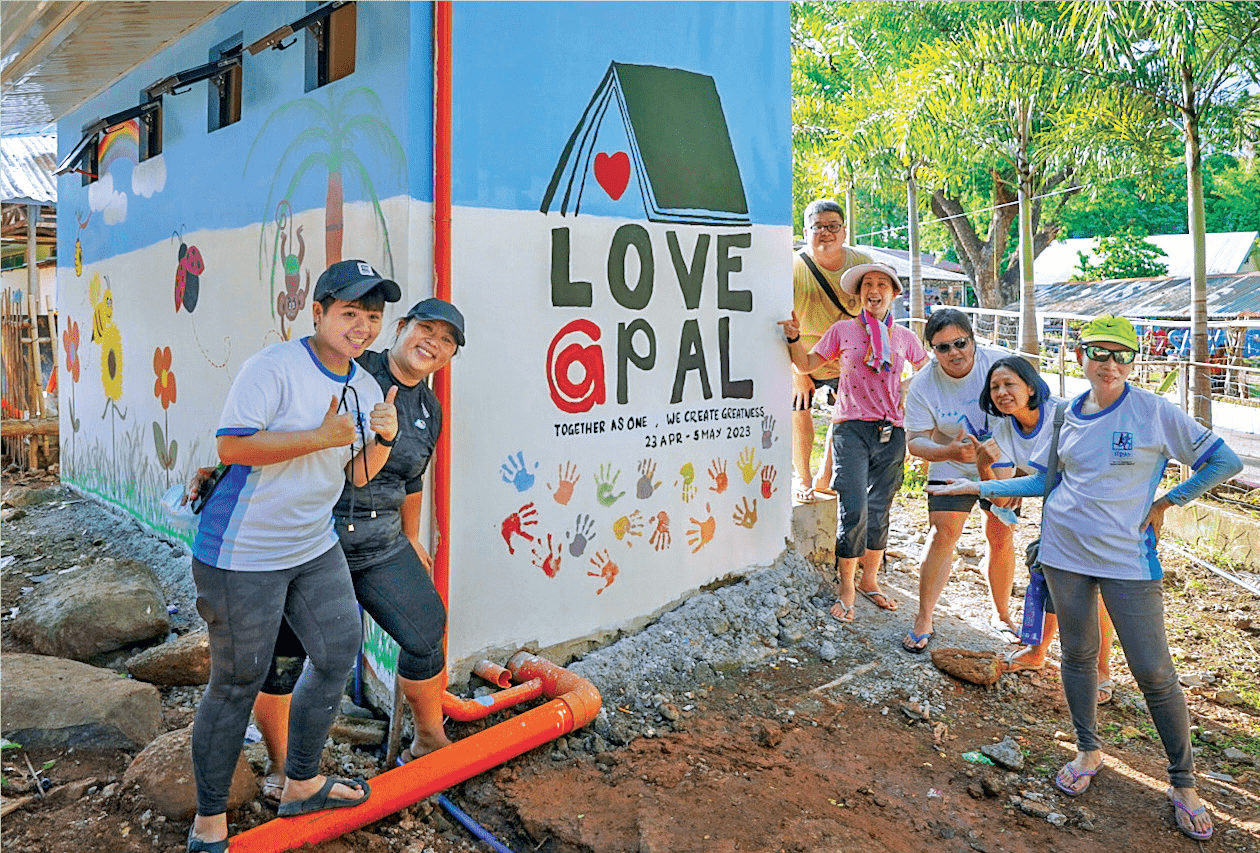
In Pangasinan province of the Philippines, Love Pal Cafe volunteers helped to build toilets, water tanks and rain water collectors, in addition to conducting educational hygiene classes for rural children and organising medical camps.
IDENTIFYING THE PIECES NEEDED
The projects undertaken by Love Pal Cafe often originate from word of mouth referrals, Ong shares. And to decide whether or not to take on a project is a simple process: “Wherever help is needed and if it’s something that is within our means to assist, we will gladly take it on,” he says.
For instance, a recent trip the team organised to Mae Sot, Thailand, came about when one of their volunteers, a Myanmarese national, highlighted that there were many Myanmarese refugees in Thailand in need of help due to the ongoing civil war in their country. Upon hearing this, Ong worked with another volunteer, You Yilun, to find ways that they could assist the community.
Through some on-the-ground research, they eventually encountered a teacher who was trying to build a school for some of the displaced children living in Thai border towns, but was forced to stop construction due to a lack of funds. The Love Pal team assessed that this was a mission they could raise the funds for, as well as possessing the know-how and resources to successfully execute. The team decided to take it on themselves to complete the school.
They got in touch with BEAM Education Foundation, which aims to provide access to education for refugees from Myanmar and underprivileged youth in Thailand, to kick things off. Ong and You took on the initial research and liaison with the foundation to identify where they could best help. The work started nearly a year in advance of the team’s actual trip to Thailand, as they identified the construction work needed to be done, the materials needed, and other donations that could benefit the community.
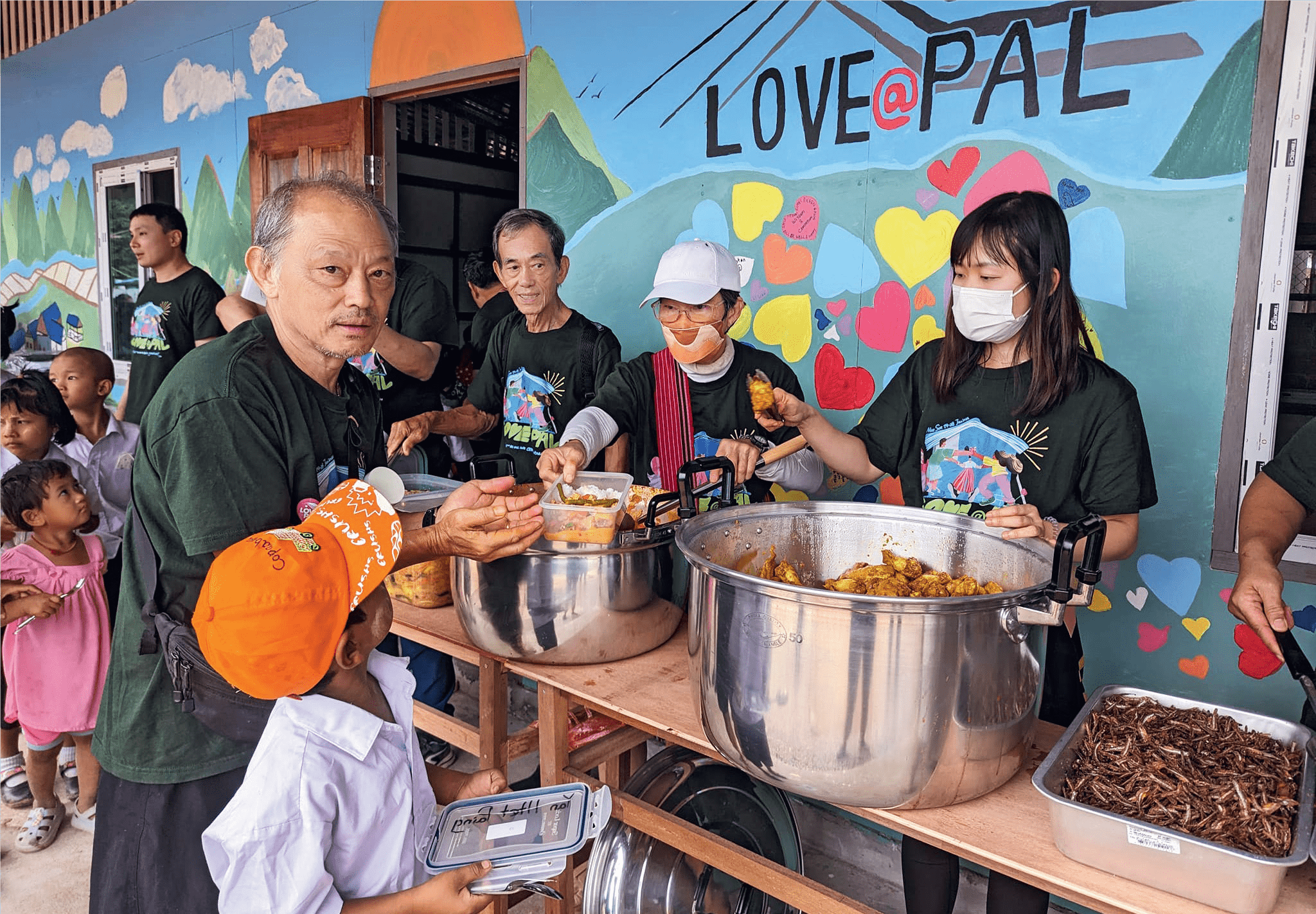
A Love Pal Cafe project in Thailand’s Mae Sot town helped to build toilets, classrooms and a playground. The mission also provided classroom furniture, treatment by TCM doctors, as well as the contribution of necessary items such as clothes, school supplies and computer equipment.
MAKING THE PIECES FIT
Once the scope of the project was finalised, the team turned its attention towards resourcing and fundraising.
Relying heavily on social media platforms such as Facebook and word-of-mouth outreach for volunteer recruitment, the team put out a call late last year, and eventually managed to bring together a group of 27 volunteers from all walks of life – the youngest was merely 16, and the two oldest volunteers were in their 70s.
Once the volunteers had been identified, the team set about its mission to organise fundraising events for the project.
“We don’t believe in asking for money; we always use a type of service in order for the public to donate to us,” Ong explains the rationale behind offering value-add services to the donation drive. This includes hosting car wash initiatives, organising bake sales or offering cleaning services in exchange for money.
“This gives volunteers a good ownership of the entire project,” he says. It is only when all of these pieces are in place that the team makes the physical trip overseas to begin the actual construction work. From the initial research phase up to completion, You estimates that the recent Mae Sot trip was a project nearly a year in the making.
In spite of the immense amount of work that each project takes, Ong and his team of volunteers readily rise to the challenge.
“What never fails to amaze me is how we seem to always do so much with so few people and so little time,” You says, crediting the volunteers behind each of Love Pal Cafe’s humanitarian undertakings.
In Mae Sot, the volunteers successfully constructed four toilets and classrooms, a multi-purpose court with a playground, alongside 40 tables and 60 benches, all in a mere nine days. Besides the construction project, volunteer traditional Chinese medicine doctors also attended to over 90 patients, and over 2,500kg worth of school supplies, clothing and computer equipment were distributed.
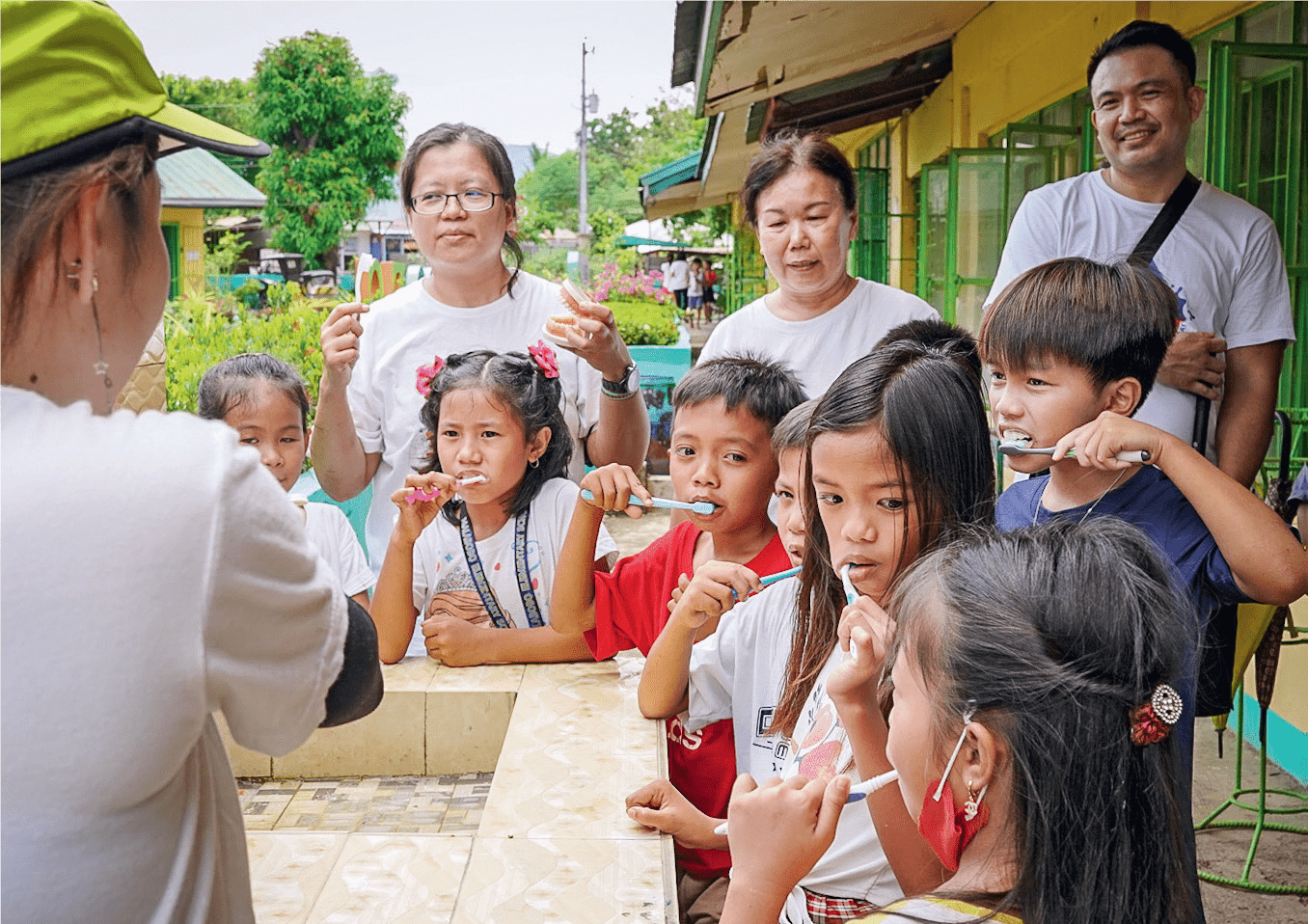
Children in the Philippines’ Pangasinan province were engaged through hygiene classes by Love Pal Cafe volunteers that included healthcare professionals.
CULTURAL LEARNINGS
While the team does put in copious amounts of work to ensure each project’s success, Ong is quick to highlight that the effort is never one-sided. Rather, many of these projects often involve working closely with the local communities.
He shares that when it comes to construction projects, the planning phase often involves having Singaporeans work with local people on the ground to ensure that the building designs take into account the local environment and culture that Singaporeans otherwise may not have thought of. The projects also lead to greater cultural awareness and learning the sensibilities of the local communities for which the projects are being built.
For example, one of the trips the Love Pal Cafe team organised was to build water tanks in Laos. But in an initial reconnaissance trip, a volunteer discovered that their main water source – the Mekong River – was contaminated with high levels of mercury due to industrial activity further upstream.
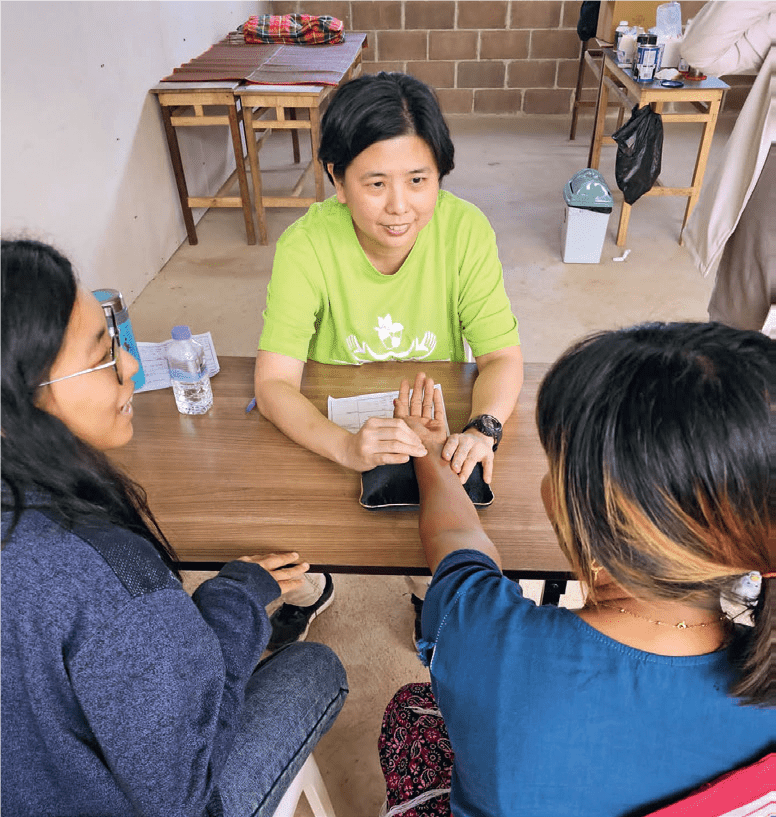
TCM doctors providing pro bono check-up and treatments to village residents in Thailand’s Mae Sot town.
“The local children gain some confidence interacting with foreigners, and for the volunteers, it opens their eyes to a new world outside of urbanised and metropolitan Singapore.”
You Yilun, volunteer, Love Pal Cafe
Consequently, they had to consider alternative means of water collection, and eventually built water tanks that could capture rainwater and water run-offs from nearby mountains instead of the river.
Ong also highlights that during the construction phase, volunteers stay on-site rather than at hotels. This gives them the opportunity to interact closely with the locals, and the local communities also chip in to help in construction efforts.
“These building initiatives in remote rural communities are, in essence, a form of cultural exchange,” You shares. “The local children gain some confidence interacting with foreigners, and for the volunteers, it opens their eyes to a new world outside of urbanised and metropolitan Singapore.”
Ong, having helmed several such initiatives over the years, concurs. “We get to witness what is happening outside of our comfortable and safe Singapore. We usually are humbled by what we see – the resilience of people with far fewer resources, and the innocence and simple happiness the children tend to exhibit.”
This May Also Interest You