A Container Full Of Ideas
The President’s Design Award winner LAUD Architects created an innovative and sustainable hotel concept using shipping containers.
BY LIEW MING EN
PHOTOS MELVIN TAN; SHAWN KOH; ASTLEY PNG-YAP; ISTOCK
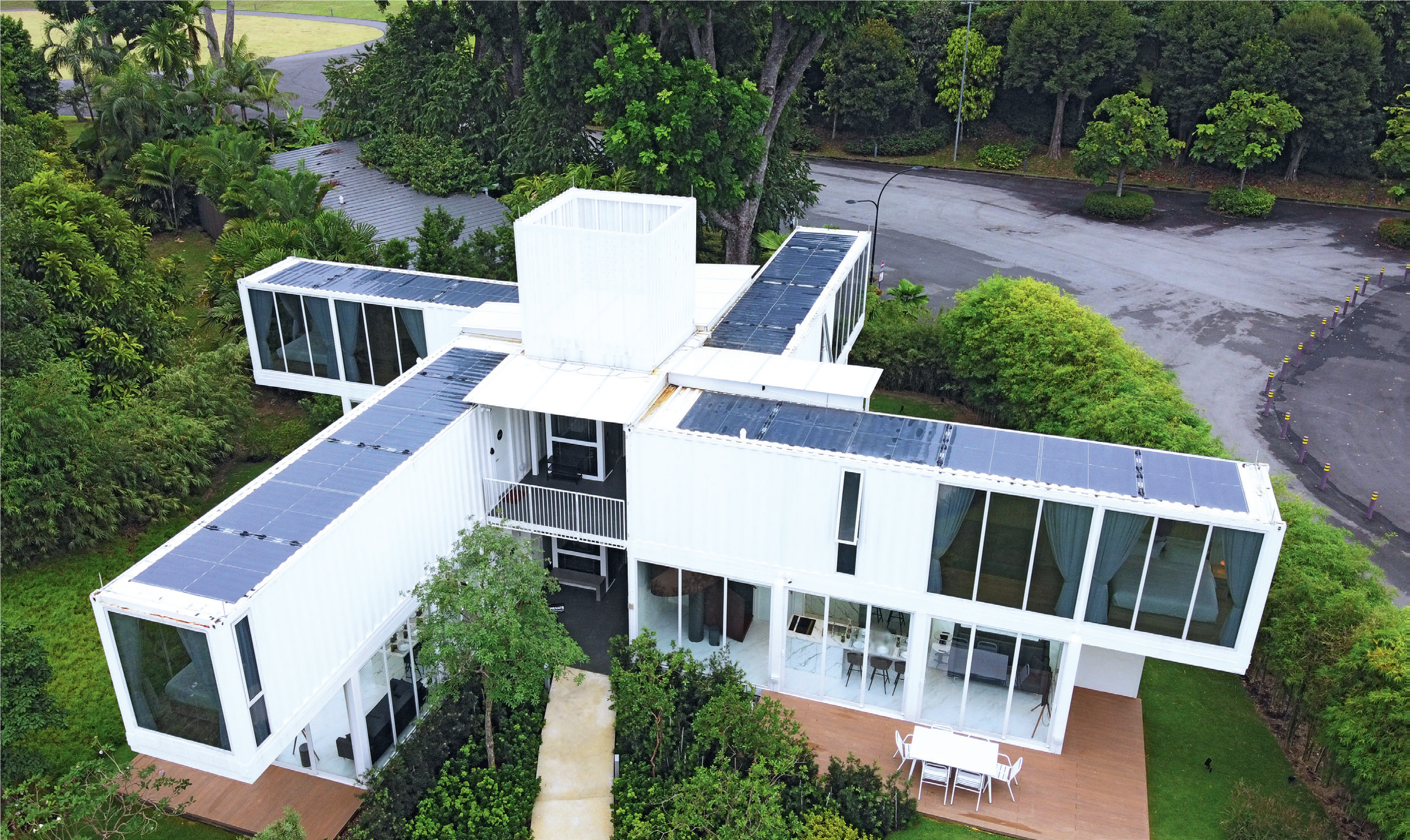
The shipping container hotel called the Garden Pod seeks to create minimal intervention on the site that it is located on, while its pinwheel layout ensures uninterrupted views from each of its four duplex suites.
N
estled within the lush greenery of Singapore’s well-known attraction Gardens by the Bay is an unlikely sight: an assortment of sleek, white shipping containers stacked upon each other to resemble a pinwheel, with a central tower that serves as a distinct marker for visitors from a distance away.
While some may think it is just another addition to the garden’s existing collection of larger-than-life sculptures, this specific structure actually has a much more functional purpose: a hotel.
Designed by award-winning architecture firm LAUD Architects and commissioned by Tiny Pod (previously known as the Shipping Container Hotel), the Garden Pod is a two-storey luxury hotel — featuring four rooms — made out of repurposed shipping containers. The architects drew inspiration from the surrounding gardens and Singapore’s vision of being a “City in Nature”, incorporating green elements into every inch of each 40-foot container.
“Shipping containers as hotel rooms speak of the more significant idea of sustainability through upcycling, and reducing the carbon footprint and environmental impact,” says Matthew Yeo, a director at LAUD Architects. “We hope to bring a new perspective to upcycling through this project.”
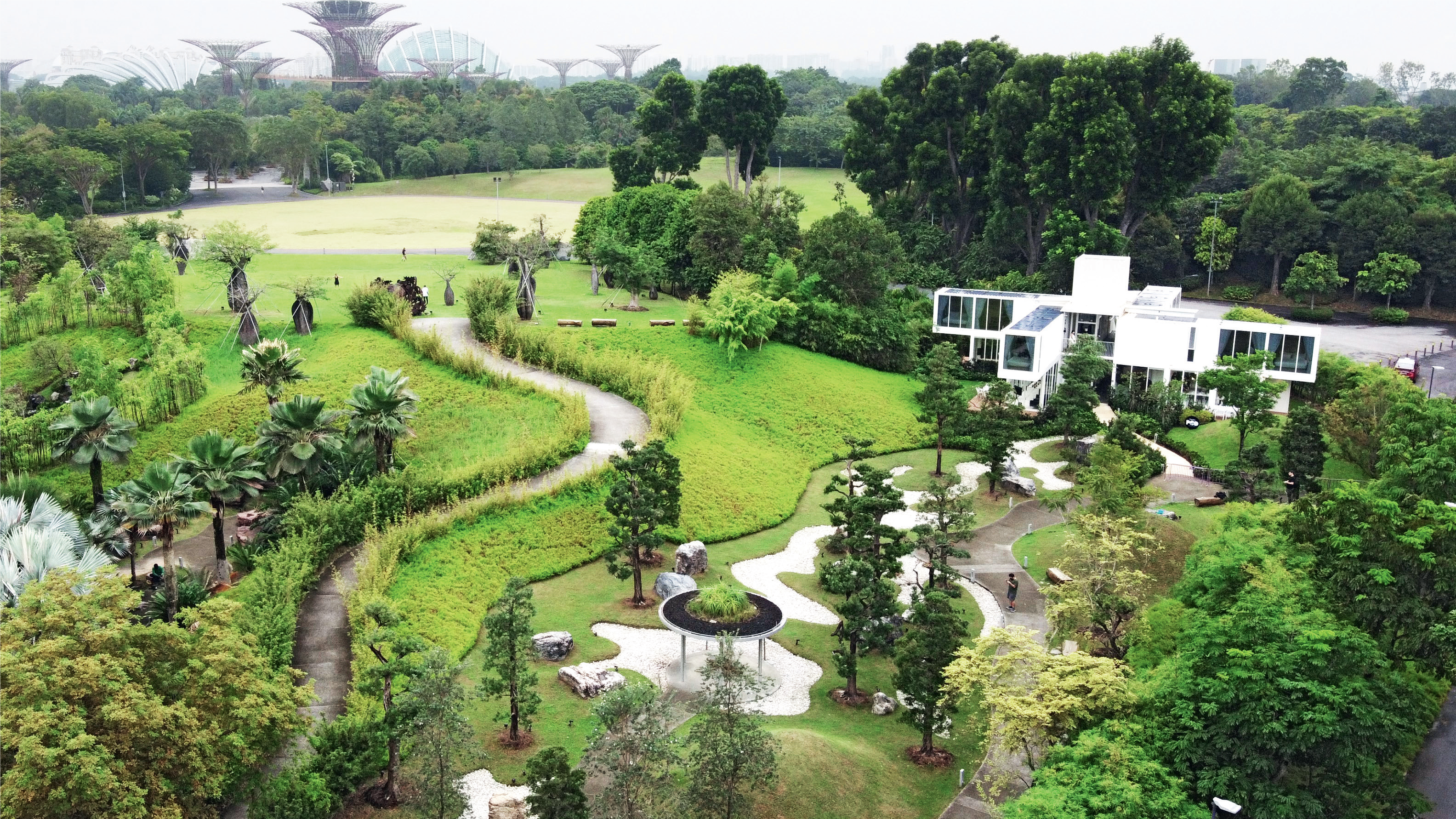
In sync with the sustainability ethos of Gardens by the Bay, where the Garden Pod is located, the architecture firm has incorporated several environmentally friendly features in the project.
“Beyond architecture, the Garden Pod experience is a co-creation with Singaporeans and aims to use its prominence as a platform for promoting other local start-ups.”
Matthew Yeo, director, LAUD Architects
With scarce land resources, the use of small, modular and mobile temporary structures in Singapore is particularly well-suited. “The overarching idea was that you do not need to have a lot to create something interesting,” says Yeo. “The use of shipping containers and lightweight steel structure allows flexibility for bespoke design that is easy to deploy, disassemble and relocate as and when the need arises.” Even the lift system at the Garden Pod is repurposed from a different project — another example of its upcycling premise.
Such modular designs also reduce the amount of carbon emissions, as it eliminates the need for large-scale construction works on-site.
This novel model can help pave the way for more entrepreneurs to explore new forms of businesses. Elaborating further, Yeo says that often it is the high land costs that deter entrepreneurs from purchasing or leasing real estate to build a permanent building. But such temporary structures can allow more people to explore their ideas in a sandbox environment without having to invest high capital otherwise associated with a permanent structure.
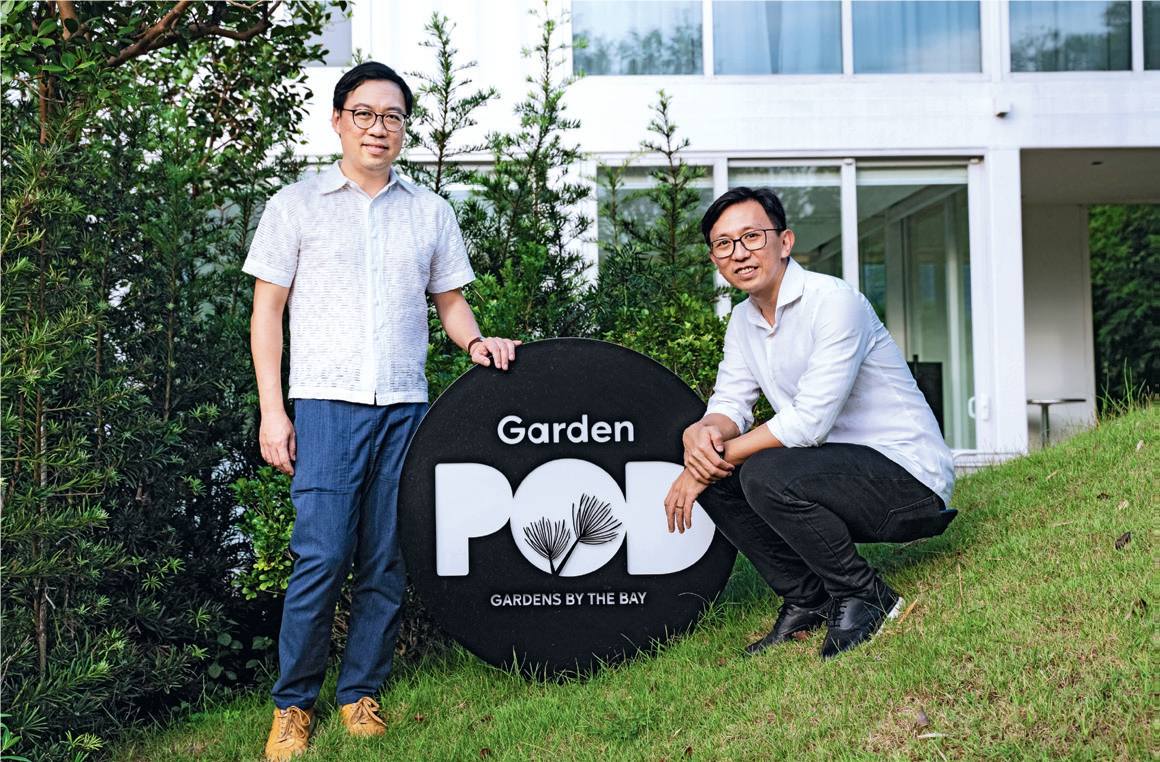
Ho Tzu Yin (left) and Matthew Yeo of LAUD Architects wanted to create a new and sustainable lifestyle experience for discerning, eco-conscious travellers.
“We do not exclude nature, but welcome it into the living spaces,” adds Ho Tzu Yin, managing director, LAUD Architects. The large panels of sliding glass doors and a semi-sheltered outdoor deck, for instance, merge the indoors and outdoors.
The distinctive pinwheel layout of the hotel is not just for aesthetic purposes either. Rather, the way the containers overlap one another ensures that all four rooms within the hotel have an uninterrupted view of the surrounding gardens, Yeo explains.
The team also sought to fully maximise the location of the Garden Pod by using the surrounding landscaping to provide privacy for the guests. As such, they went with a two-storey structure for each room.
“The lower floors serve as social areas like living areas and outdoor decks, which encourage immersion and interaction with nature,” says Yeo. “Meanwhile, bedrooms are located on the upper floor, providing guests with an elevated view of adjacent gardens while also offering them privacy.”
SUSTAINABILITY IN EVERY CORNER
Every design element of the Garden Pod was created with sustainability at the top of mind, aligning with Gardens by the Bay’s sustainability goals, says Ho. First off, he explains that the use of containers and lightweight steel structures stems from the idea of touching the ground lightly to minimise disruptions to the gardens and the surroundings.
Within the gardens where the Garden Pod is sited, the Flower Dome and Cloud Forest conservatories are often regarded as marvels of engineering, featuring glass that has a special coating to reduce solar heat gain as well as sensor-operated sails that provide shade to the plants if it gets too hot.
Similarly, the Garden Pod features a combination of double glazed glass, heat insulation and white exteriors to keep the rooms cool, thereby reducing the load on air-conditioning, Yeo explains. Energy saving devices and power monitoring systems placed in the rooms further optimise energy efficiency.
The project also features rooftop solar panels — developed and installed by a local start-up called PV Foundry — which account for up to 80 per cent of the hotel’s electricity needs, according to Yeo. “Excess electricity generated by the hotel is exported back to the grid,” he adds.
AN ECOSYSTEM APPROACH
The concept-driven project also espouses the use of other locally made products with strong sustainability ethos in the hotel. “Beyond architecture, the Garden Pod experience is a co-creation with Singaporeans and aims to use its prominence as a platform for promoting other local start-ups,” says Yeo.
To this effect, the rooms feature little touches of luxury created by Singaporean companies. For instance, the room fragrance is made in Singapore by Maison de L’Asie, Asia’s first luxury niche fragrance house. Meanwhile, drinking glasses and terrarium displays found throughout the room are made from repurposed glassware by local artisans from homegrown company Soda Lemon, while drink coasters are made from recycled plastic by The Plastic Project Singapore. Even the soil within the terrarium displays comes from upcycled horticulture and landscaping waste from another local firm, Soil Social.
Yeo’s team hopes that through these collaborations, the Garden Pod becomes a platform to showcase sustainability efforts by other local firms. He adds that the experimental project demonstrates that the conservation of environment is being taken seriously as a collective effort by Singaporean society.
“Our concerted move towards sustainability and wellness, such as the installation of energy-efficient lightings and rainwater harvesting system, speaks to evolved travel demands that future-proof our sector.”
Wei Lin Kwee, president, Singapore Hotel Association
Hospitality industry experts concur that the need to create unique and sustainable experiences in a small city-state like Singapore becomes even more pertinent considering the challenging circumstances foisted by the Covid-19 pandemic that battered the tourism industry worldwide. “Our concerted move towards sustainability and wellness, such as the installation of energy-efficient lightings and rainwater harvesting system, speaks to evolved travel demands that future-proof our sector,” says Wei Lin Kwee, president of the Singapore Hotel Association.
The Garden Pod is a demonstrable project that combines novel experiences with conscious lifestyle offerings. “As a catalyst for creating sustainable experiences, Garden Pod seeks to offer the tourism industry a boost after being severely affected by Covid-19,” adds Ho.
CONTAINER ARCHITECTURE
Hotels aren’t the only alternative for the usage of old shipping containers. Across the world, such cargo containers have been transformed in many innovative ways.
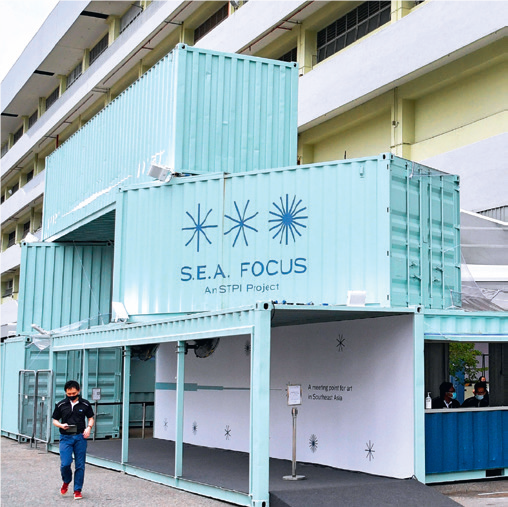
SINGAPORE
Shipping containers make up part of an office at the Singapore Art Museum at Tanjong Pagar DistriPark, paying homage to its location by the port.

AUSTRALIA
Overlooking the Swan River in Perth is the Containbow, an art installation of nine multi-coloured recycled shipping containers by local artist Marcus Canning.
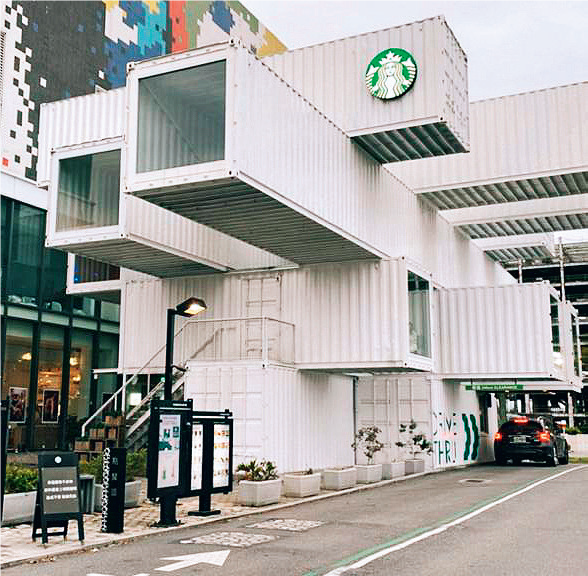
TAIWAN
Sustainability meets functionality in another upcycling example in Hualien City, where shipping containers were repurposed to create a Starbucks outlet.
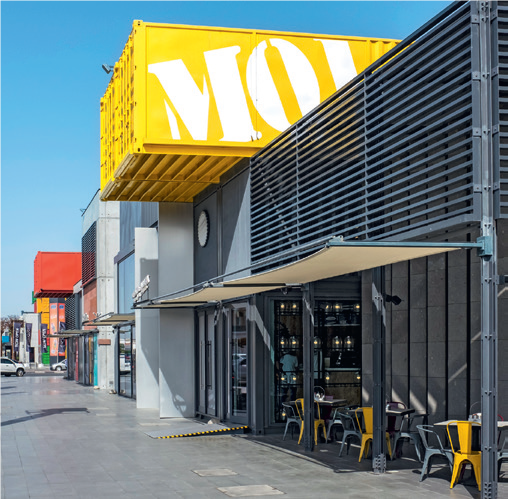
DUBAI
The Boxpark and South Korea’s Common Ground are two shopping districts made up of a collection of shipping containers that house art galleries, boutiques and cafes.
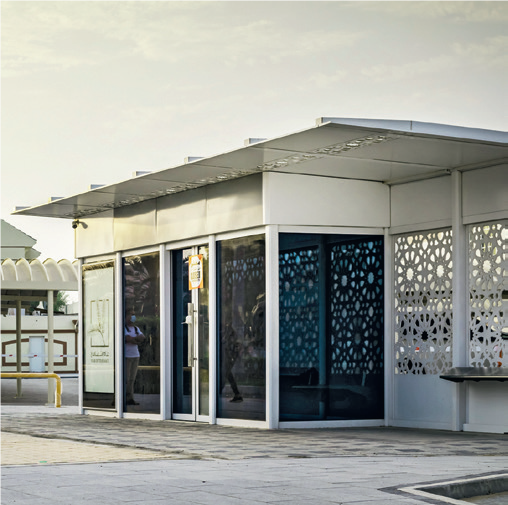
ABU DHABI
Commuters flag down buses at shipping containers-turned-air-conditioned bus stops, which cost about 40 per cent less than regular bus shelters to build.
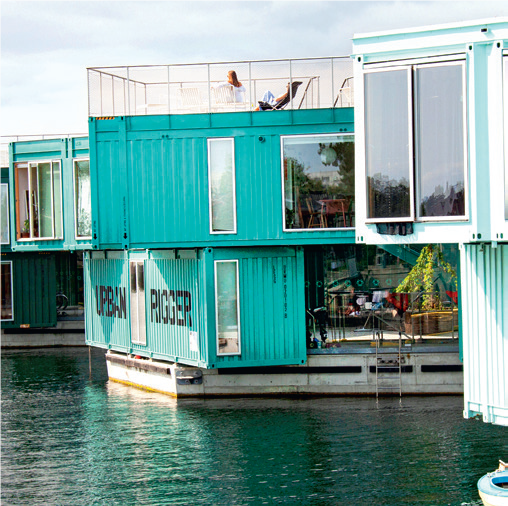
DENMARK
Architecture firm BIG’s Urban Rigger project features nine stacked shipping containers on a floating platform in Copenhagen harbour, serving as 15 floating student residences.
This May Also Interest You